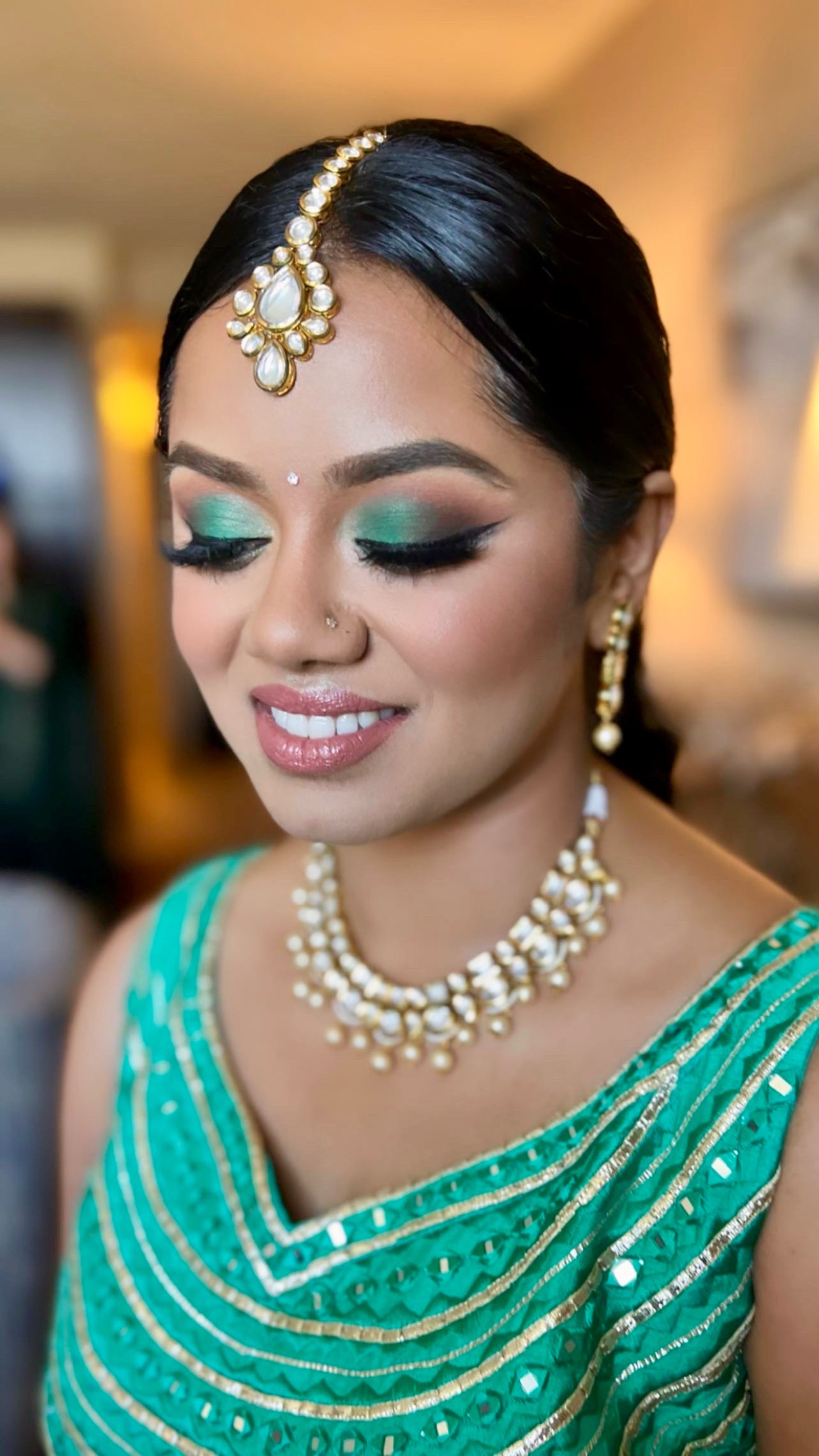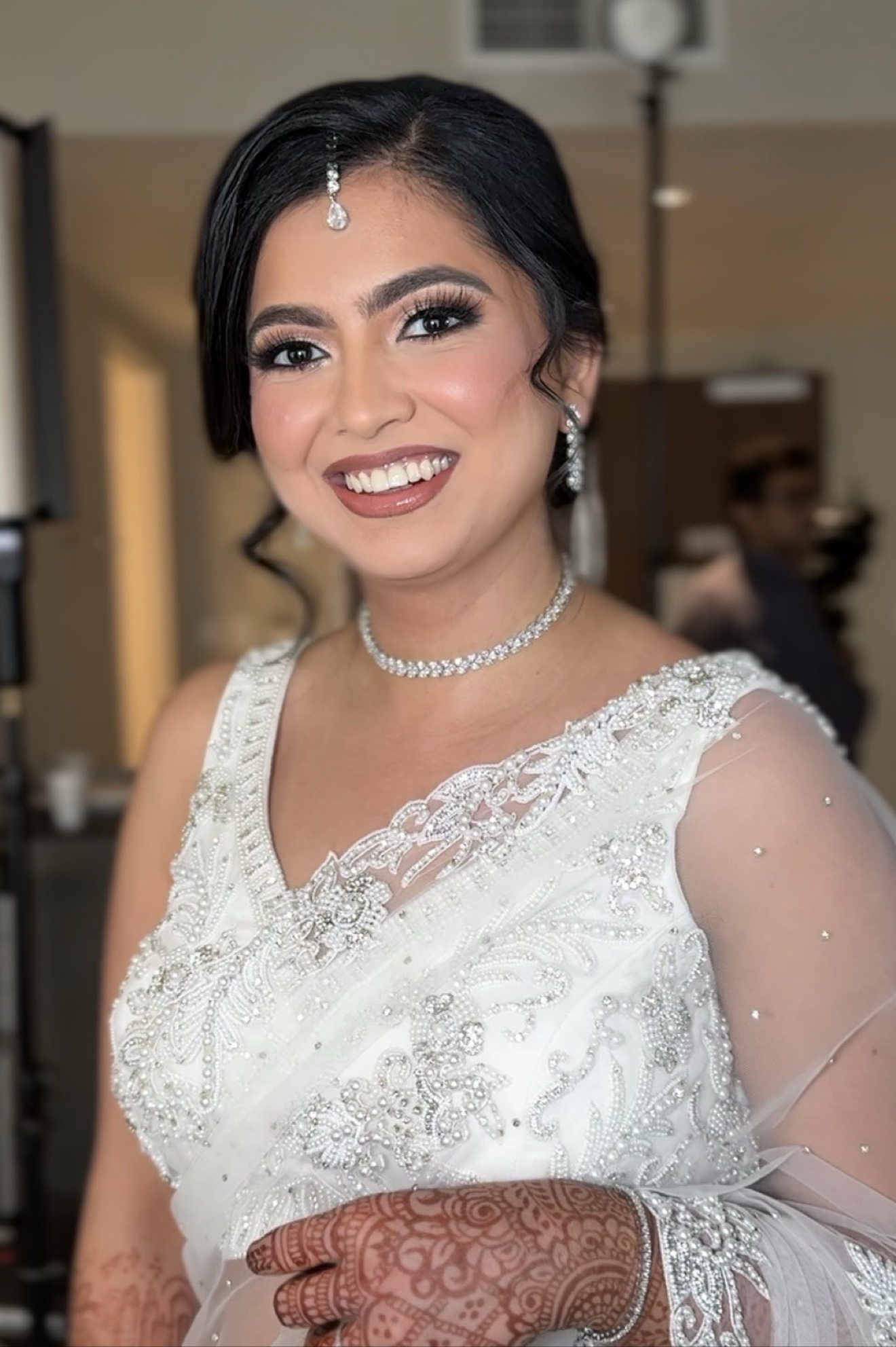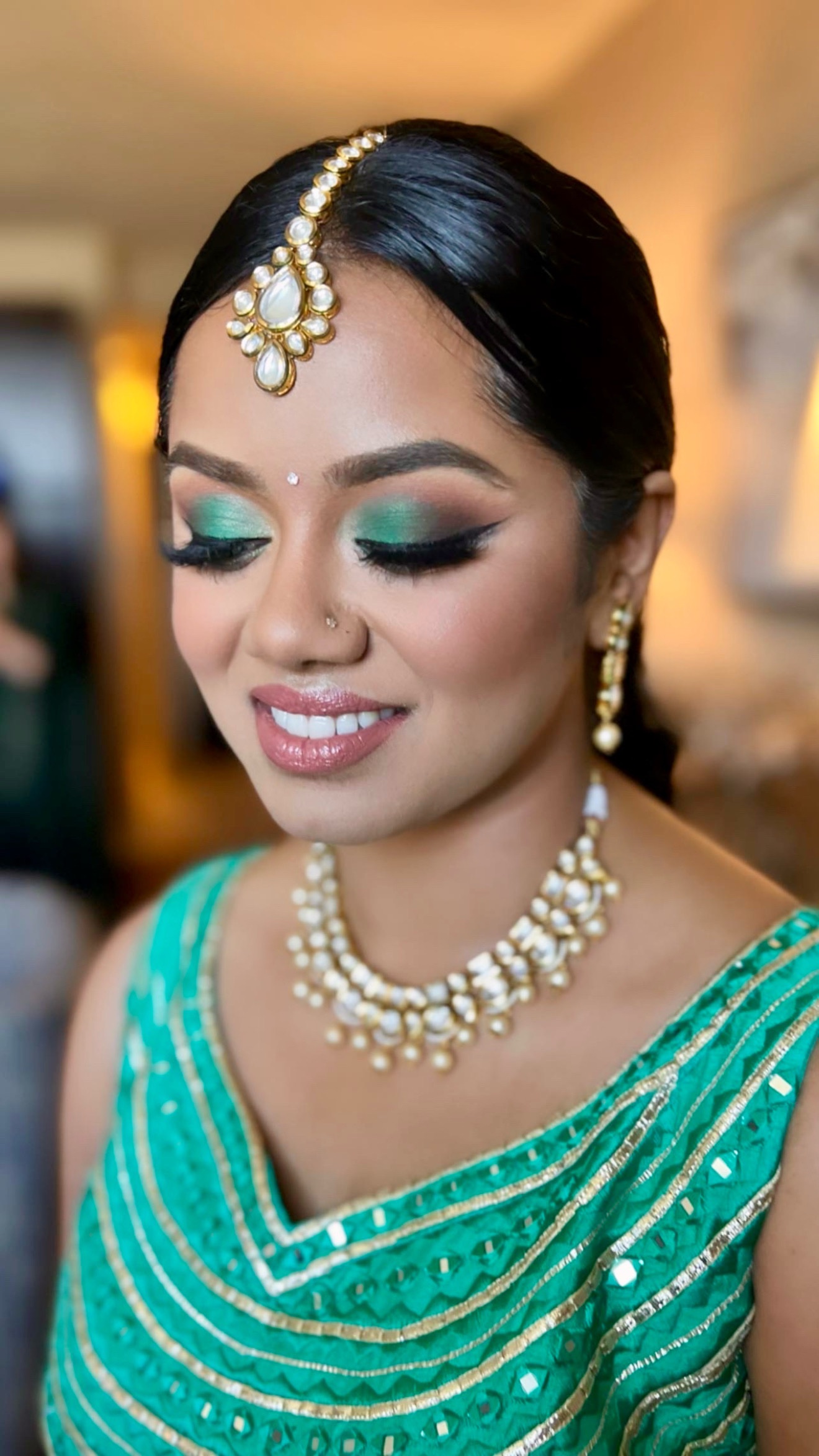
Jewelry is where a bridal look either coheres or collapses, and the neckline is the decision point most brides overlook. You chose the outfit for its embroidery, its drape, its color. Then the necklace arrives and suddenly it fights the collar, disappears into the work, or overwhelms everything beneath it. The fix is not more jewelry. It is the right jewelry, placed with intention, balanced against the weight of the outfit. Here is how to think like a stylist: neckline first, necklace second, everything else in service of the pair.
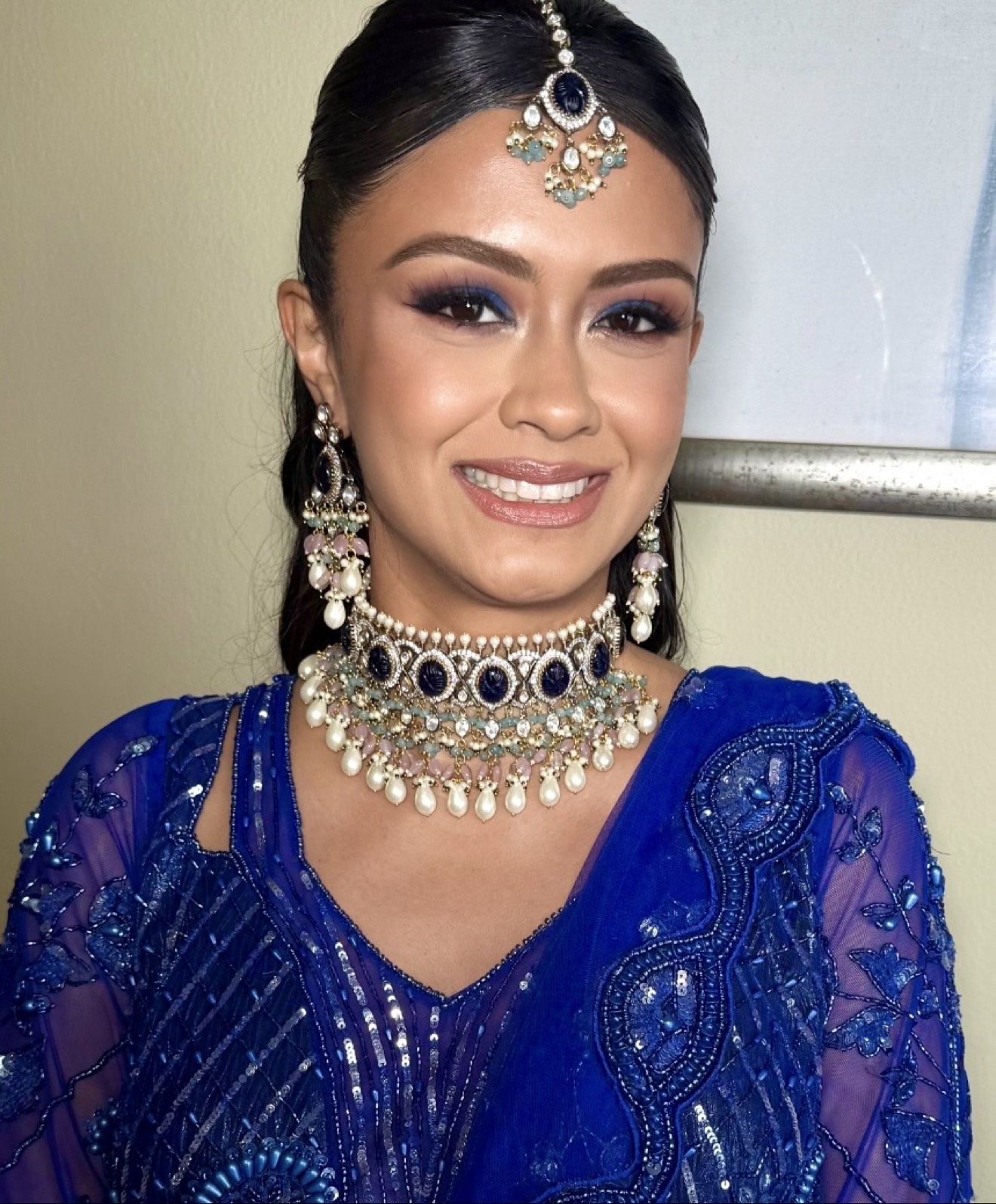
Start with the golden rule that governs all bridal styling: the eye needs one hero per frame. A heavily embroidered neckline asks for restraint above it; a clean, open neckline invites a statement. When the outfit is doing the talking, let the jewelry whisper. When the outfit is quiet, let the jewelry sing. That single principle resolves most pairing dilemmas before they begin.
Sweetheart Necklines
A sweetheart neckline frames the collarbone in a soft curve, and it flatters nearly every necklace style, which is exactly why brides overdo it here. The most refined pairing is a choker that sits just above the curve, following its line without touching it. A short polki or diamond choker with the sweetheart’s dip left clean reads as classic bridal. If you prefer length, choose one long piece, a rani haar or a single-strand satlada, and skip the choker entirely; two necklaces crowd the curve. Earrings can be generous here, chandbalis or jhumkas, because the open neckline balances their weight.
Boat Necklines
The boat neckline runs wide and high, skimming the collarbones, and it leaves almost no room for a necklace. This is not a problem; it is an invitation to shift the drama elsewhere. Skip the necklace entirely or wear the finest single chain you own, and let long earrings carry the frame: shoulder-grazing chandbalis, dramatic jhumkas, or modern drops. A matha patti or a statement maang tikka adds height and interest where the neckline stays quiet. The boat neckline also loves a low bun or sleek pulled-back hair, which keeps the wide line clean and lets the earrings move.
V Necklines
The V neckline creates its own geometry, and the necklace should echo it. A pendant or a V-shaped polki set that mirrors the neckline’s angle looks intentional; a choker that cuts across the V looks like a disagreement. Length matters: the necklace should end above the point of the V, never below it. A rani haar works beautifully with a deep V, provided the choker is left out. Keep earrings medium in scale, elegant drops or mid-size jhumkas, so the vertical line of the V stays the longest line in the frame.
High Collar Necklines
A high collar, bandhgala-inspired or a closed mandarin neck, is jewelry’s hardest brief and its most elegant answer is subtraction. No necklace competes well with a collar that already frames the throat, so retire the necklace and invest the budget in what the collar leaves visible: exceptional earrings, a striking maang tikka or matha patti, and perhaps a haath phool or statement kada on the wrist. If the collar is plain fabric, one delicate pendant chain worn outside it can work, but if there is any embroidery at the throat, leave it alone. The collar is the necklace.
Earring Scale and Hair Jewelry
Earrings set the width of your look. With a choker, keep earrings refined, studs or small jhumkas, because two bold pieces at the same height crowd each other. With a long rani haar or no necklace, earrings can go dramatic. The maang tikka sits at the center part, its pendant landing just above the brow; it should align with the nose bridge, never slide toward the hairline. A matha patti frames the forehead instead, and pairs best with simpler necklaces, since it already adds width across the face. Never wear both a heavy matha patti and a choker; the frame becomes all edge and no rest. If your hair is worn down, choose earrings with enough length to clear the hair, or pin one side back so they stay visible.
Balancing Heavy Embroidery With Jewelry Weight
This is the question behind every pairing: how much is too much? Stand back and read the outfit as a surface. If the bodice is dense with zardozi, dabka, or stone work up to the throat, the jewelry’s job is to stay out of its way: skip the necklace or choose the simplest kundan studs and let the embroidery be the statement. If the embroidery sits low on the skirt with a clean bodice, the neckline is free for a hero piece. Match metals deliberately: polki with gold-toned embroidery, diamonds with silver or platinum tones, and never mix more than two metal families in one look. Finally, count your statement pieces before you leave the house. Two is confident. Three is the absolute ceiling. Four is a photograph you will wish you could retake.
Layering: Choker Plus Rani Haar
The classic bridal stack, a choker with a long rani haar, works when the two pieces are designed as a pair, not when they merely match. Keep one ornate and one simple: an elaborate polki choker with a clean single-line haar, or a simple kundan choker with an ornate satlada. The lengths must be distinct, the choker high on the throat and the haar falling well below the bust, so each has its own territory. If both pieces are heavy, the neckline disappears between them, and no embroidery can survive underneath. When in doubt, this is the pairing most worth testing with the actual outfit on, under real light, before the wedding week begins, the kind of detail a bridal styling consultation resolves early.
The Supporting Cast: Nath, Haath Phool, and Bangles
Beyond the necklace, three pieces complete the bridal frame. The nath, worn traditionally on the wedding day, should be proportionate to the nose and the earring; a large nath with large chandbalis crowds the cheek, so scale one of them down. The haath phool connects ring to bracelet and reads best when the hands are visible, which makes it a natural partner for mehndi and ceremony looks where henna is on display. Bangles and kadas ground the wrist: if the necklace is the hero, keep the wrist to a refined stack; if the neckline is bare, the wrist can carry more weight. Every piece should answer to the same metal family and the same mood, heirloom or modern, never both at once.
None of this can be decided from a jewelry box alone. Put the outfit on, add the pieces one at a time, photograph yourself in daylight and in evening light, and remove the last thing you added. Styling is subtraction as much as selection, and the brides who look most at ease are the ones whose jewelry looks chosen, not accumulated.
FAQ
Can I wear a choker with a rani haar?
Yes, when they are designed as a pair. Keep one ornate and one simple, and keep the lengths distinct so each has its own territory. Two heavy pieces will swallow the neckline.
My blouse has a high embroidered collar. Should I skip the necklace?
Yes. A high collar already frames the throat, so put the jewelry budget into earrings, a maang tikka or matha patti, and wrist pieces. The collar is the necklace.
How do I choose between a maang tikka and a matha patti?
A maang tikka suits a center part and pairs with almost any necklace. A matha patti adds width across the forehead, so it pairs best with simpler necklaces and should not be combined with a heavy choker.
Should my jewelry match my outfit’s embroidery metal exactly?
Stay in the same metal family, polki with gold tones, diamonds with silver tones, and limit yourself to two metal families per look. Exact matching matters less than a deliberate, consistent palette.
A final note
Jewelry pairing is one chapter of a much larger plan, and it is the kind of detail that rewards a strategist’s eye. Bridal Creative Direction is a strategy-only consulting service: it starts with an application, followed by a fit call, and from there your complete bridal jewelry and outfit pairings are designed for you, event by event, so nothing is guessed at the last fitting. Learn more about the service here: https://jtorryart.com/south-asian-bridal-creative-direction/