Most brides picture a trial as a preview. It is more than that. A trial is where we learn what your skin, your hair, your outfit, and your wedding morning actually require, while there is still time to make thoughtful choices. Nothing about that learning should happen for the first time on the wedding day itself, when family is arriving, photographs are waiting, and every decision carries more weight than it should.
I am Jenny Torry of JTorry Makeup + Hair Artistry. I bring 18+ years of experience, have served 3,500+ women, take one bride per day, specialize in South Asian bridal beauty, and am known for airbrush makeup. I serve brides across Dallas and Fort Worth and at destinations worldwide. My philosophy is simple. “You should wear the makeup, not the other way around.” A good trial is how that philosophy becomes practical, because it lets us test every important choice before the day asks you to trust it.
What a trial actually proves
A finished look in the chair proves very little on its own. Almost any makeup can look beautiful in the first ten minutes, under kind light, before you have moved, eaten, cried, or worn it through a full afternoon. A trial proves something deeper. It proves whether the color is truly yours, whether the products agree with your skin, whether the hairstyle can carry everything placed on it, and whether the timing we have planned for the wedding morning is honest.
It also proves how well we understand each other. Words like soft, natural, and glamorous mean different things to different women. At the trial, those words become visible. You can point to the exact depth of color you love, the exact finish that still feels like your skin, and the exact point where a look stops feeling like you. That shared understanding is one of the most valuable things we carry into the wedding morning.
Color has to be seen on your skin, in real light
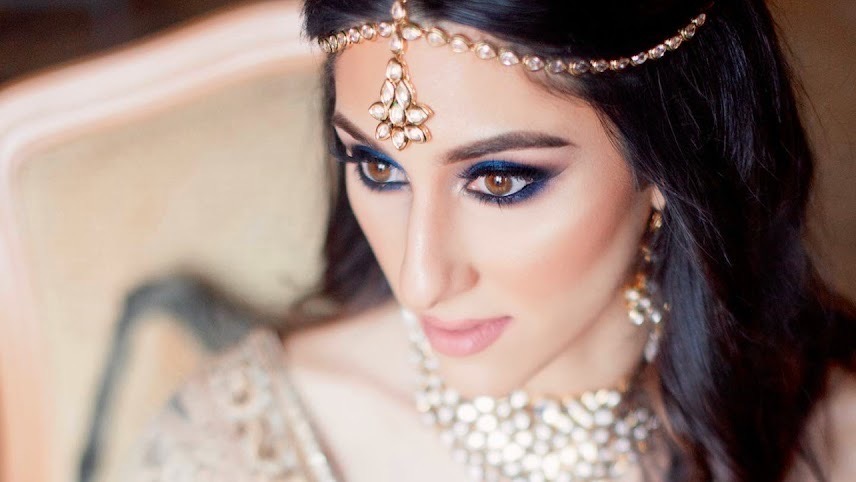
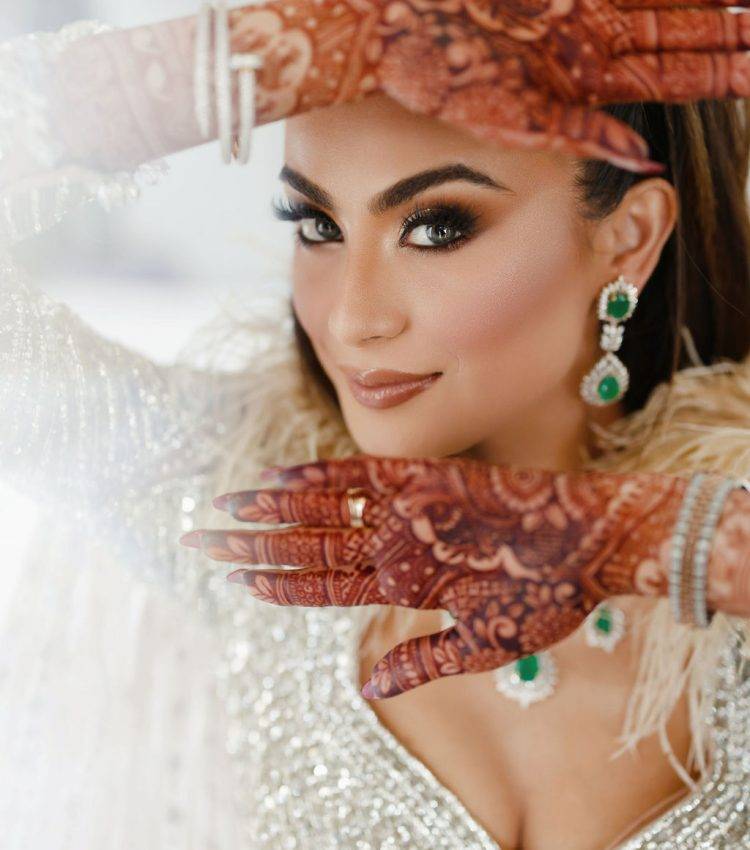
Foundation that looks right on a hand or in a photograph can sit very differently on a face. Your face, neck, and chest may each hold a slightly different tone, and the right match has to bring them together as one. At the trial we study that match along your jaw and neck, in natural light and in indoor light, so the color holds wherever the day takes you.
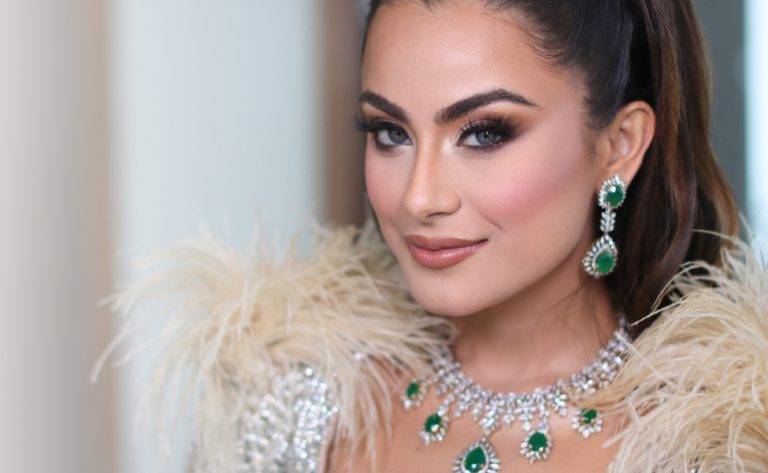
We study the rest of the color story with the same care. Blush, bronzer, eyeshadow, and lip color all change against the tones of your outfit and the warmth or coolness of your own skin. A shade that looks gentle in the pan can disappear once it is placed, and a shade that looks bold in the tube can become quiet and balanced once it meets your features. Seeing everything together, on you, is the only honest test. When something needs adjusting, we adjust it during the trial, calmly and precisely, with days or weeks still ahead of us.
Wear tells the truth that a mirror cannot
The second test begins after you leave my chair. A bridal look has to live through hours of emotion, movement, embraces, food, and weather. At the trial you get to watch how your makeup settles as the day goes on. You notice where your skin becomes luminous, where powder may need a lighter hand, and how your lip color feels after eating and drinking. You learn whether your lashes feel comfortable, whether your skin still feels like skin by evening, and whether anything asks for more support.
Your hair gives us the same kind of truth. Curls soften. Volume settles. A style that felt secure at noon should still feel secure at dinner. Watching that progression tells us which products to choose, where to place support, and how much structure your chosen style truly needs. None of this is guesswork once we have seen it happen. Without a trial, all of it would be discovered on the one day when discovery is most expensive.
Your dupatta and jewelry are part of the hairstyle
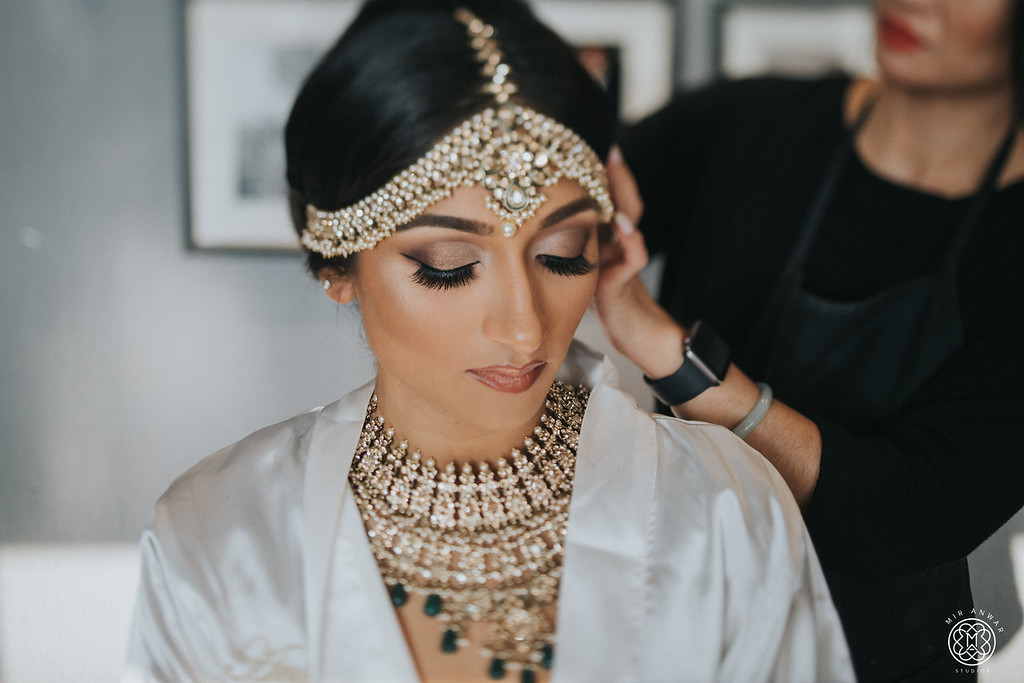
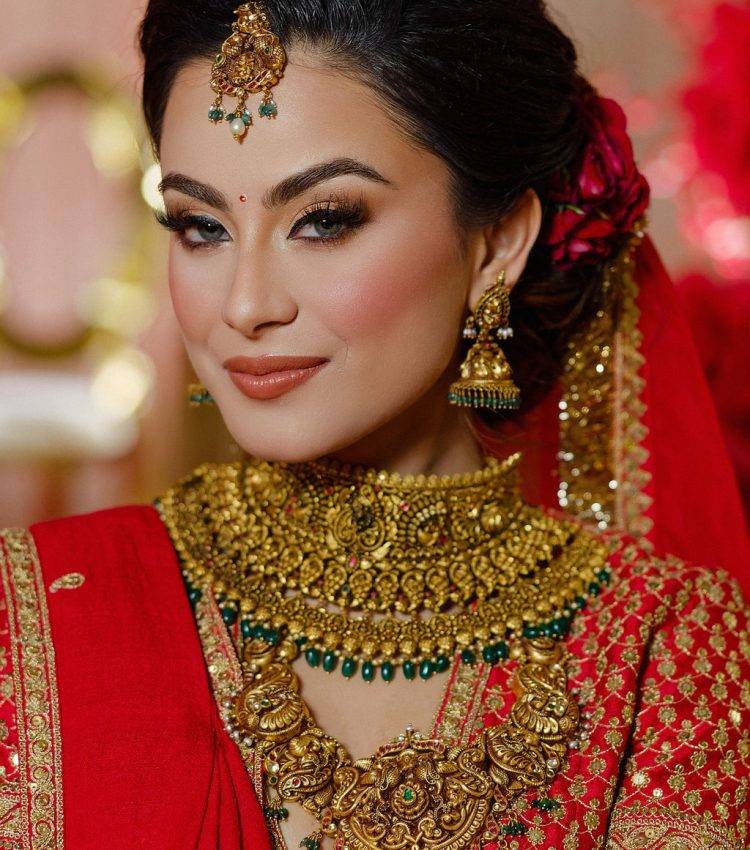
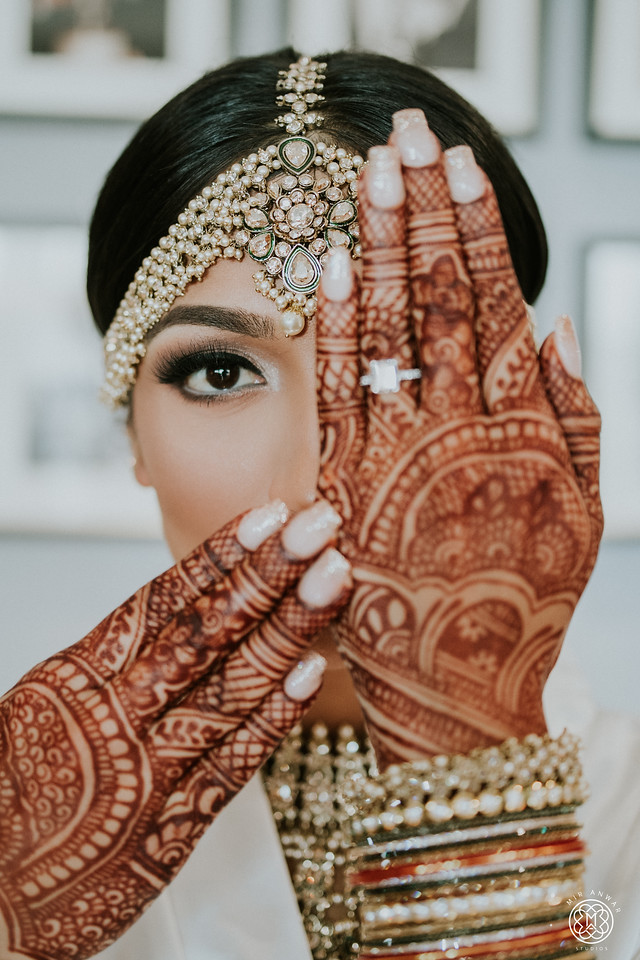
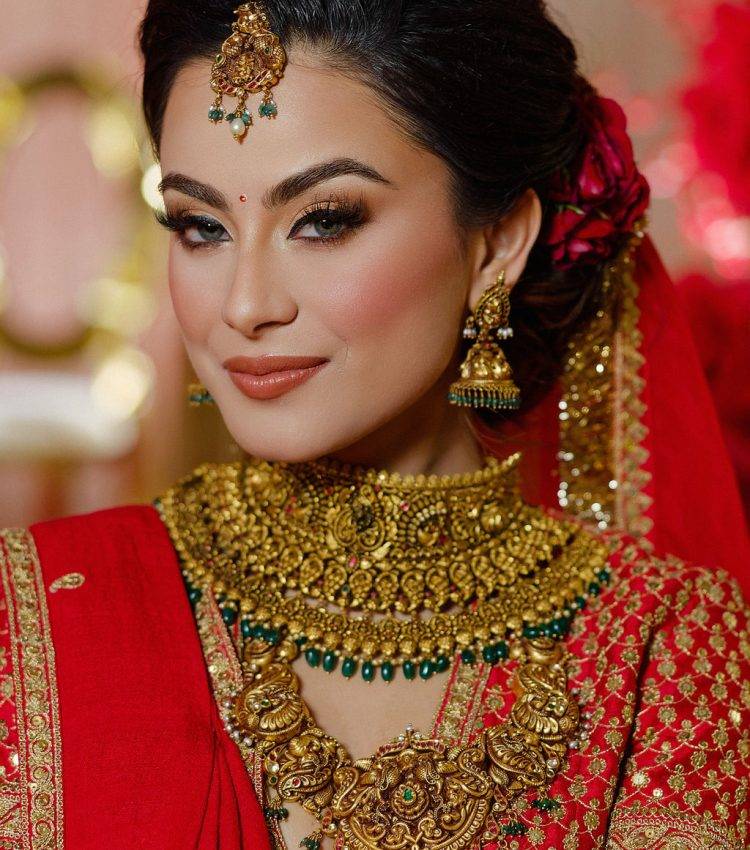
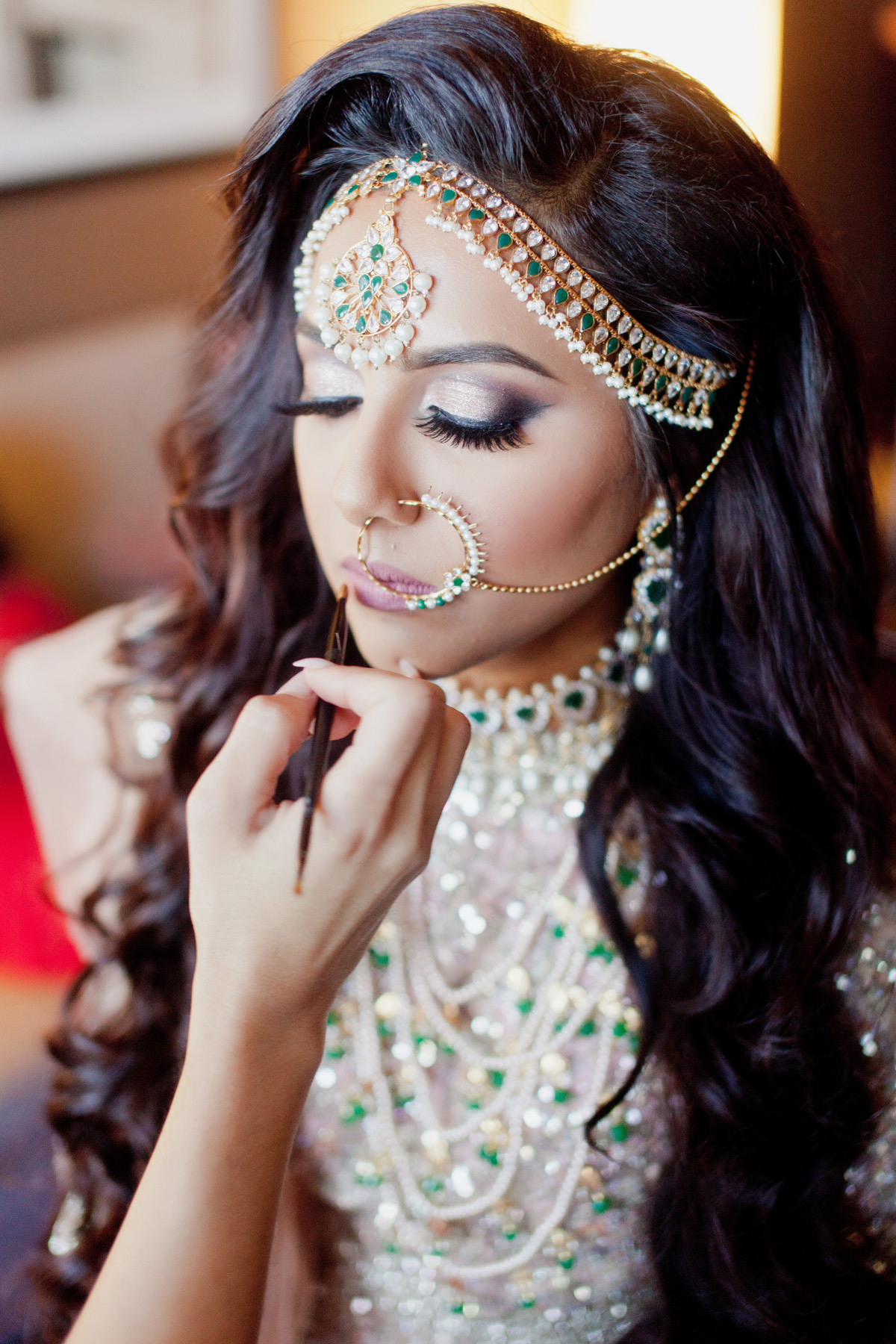
For an Indian bride, a hairstyle is never finished when the last pin goes in. The dupatta has weight. The jewelry has weight. Together they change how a style sits, how it moves, and how it feels across many hours. A dupatta draped over the head or across the shoulder can cover part of the hair, pull gently at a pin, or shift the balance of the whole look. Heavy earrings can rest against styled hair. A piece worn at the hairline needs a secure and comfortable place to sit.
That is why I ask you to bring your dupatta and your jewelry, or pieces of similar weight, to the trial. We place everything on the real hairstyle and study the look from the front, from the side, and from behind. We decide where the dupatta will be secured, how much hair should remain visible, and what keeps every piece comfortable. A hairstyle that has already carried its full weight once will not surprise you on the wedding morning.
How the trial changes wedding day decisions
Nearly every trial changes something, and that is its purpose. We may change a foundation because the wear showed us a better finish. We may deepen or soften the eye because photographs from the trial showed you how the look reads at a distance. We may choose a different lip color, move the placement of blush, or give the hair more structure because we saw how it settled by evening.
We also make decisions you might not expect. The trial tells us how long your look truly takes, so your start time is built on evidence rather than hope. It tells us whether hair or makeup should come first, when the dupatta should be set, and which final adjustments belong at the very end. I record what we chose and what we changed, so the wedding morning is an execution of decisions already made, not a new conversation held under time pressure. When those decisions are settled in advance, the JTorry bridal beauty experience can unfold with the calm and intention it was designed to hold.
Skipping the trial does not remove any of these questions. It only moves them to the wedding morning, where the time to answer them is shortest and the cost of a wrong answer is highest. Brides underestimate that risk because the trial looks optional on a checklist. In practice, it is the appointment that makes every other appointment on the wedding day run as planned.
If your celebration spans several events, South Asian Bridal Makeup in Dallas: How to Plan Your Sangeet, Ceremony & Reception Looks shows how each look is planned as part of one collection.
FAQ
When should I schedule my bridal trial?
Schedule your trial early enough that we have time to act on what we learn, and close enough to the wedding that your hair length, skin, and vision for the look are much as they will be on the day. For most brides, that means several weeks before the wedding. If we need to adjust a product, a color, or the timing of the morning, those weeks give us room to do it well.
Should I bring my dupatta and jewelry to the trial?
Yes. Bring both if you have them. Their weight and placement shape the hairstyle in ways we cannot judge without them. If a piece has not arrived yet, bring something of similar weight and size so we can still plan how it will sit and how it will be secured.
What if I want to change something after the trial?
Tell me. That conversation is exactly what the time between the trial and the wedding is for. Wear the look, study your photographs, and notice what you keep returning to. A clear adjustment made in advance is simple. The same adjustment raised for the first time on the wedding morning adds pressure to a day that should feel settled.
Can I skip the trial if I know exactly what I want?
You can know the look you want and still benefit from testing it. Knowing a look in your mind is different from knowing how it matches your skin, wears across the hours, and carries your dupatta and jewelry. The trial tests the version of that look that exists in real life, on you, which is the only version that matters on the wedding day.
A final note
Your trial is not an extra. It is the appointment where your look stops being an idea and becomes a plan that has already been tested on your skin, in your hair, and against the real demands of your day. Begin with the Indian bridal page on my site to see how the experience is structured, and then reach out about your date so we can plan your trial with the same care. You can call me at 469-905-4699. I would be honored to help you walk into your wedding morning knowing exactly how beautiful you will feel, because you have already seen it.
Brides who are still choosing their artist may also find South Asian Bridal Makeup Artist in Dallas: What Brides Should Know helpful before they book.