Your wedding week is not one look, it is a story told across five rooms. You already know the events by heart: the haldi with its laughter and marigolds, the mehndi with music and henna, the sangeet with its stage lights, the ceremony with its weight and ritual, the reception with its final, sparkling farewell. The question is never whether you will look beautiful at each one. The question is how to make five looks feel like one woman, with a beginning, a middle, and an end, when you have no spare evenings to plan it all yourself.
That is where styling becomes strategy. Most brides choose each outfit in isolation, then realize at the last fitting that nothing speaks to anything else. A strategist plans the arc first: where the color deepens, where the jewelry crescendos, where the hair and makeup shift from soft to sculpted. Below is the event-by-event framework, the same one used inside South Asian bridal styling consultations, so you can see how the pieces connect.
Haldi: Keep It Light, Fresh, and Effortless
The haldi is intimacy: family, turmeric, morning light, and photographs you will actually frame. Reach for easy silhouettes that move and wash well, because turmeric stains are part of the memory. A cotton or mulmul sharara in sunflower yellow or marigold orange, a simple anarkali in breathable georgette, or a pastel lehenga in a washable fabric if your family dresses up. Keep embroidery minimal; the haldi paste and flower jewelry do the visual work. Jewelry: fresh flower jewelry only, a simple maang tikka or floral matha patti, small studs. Hair: a low braid or loose waves that survive hugs. Makeup: bare-skin luminous, waterproof mascara, a tinted lip. This is the softest version of you, and the baseline every later look builds on.
Mehndi: Color, Play, and Movement
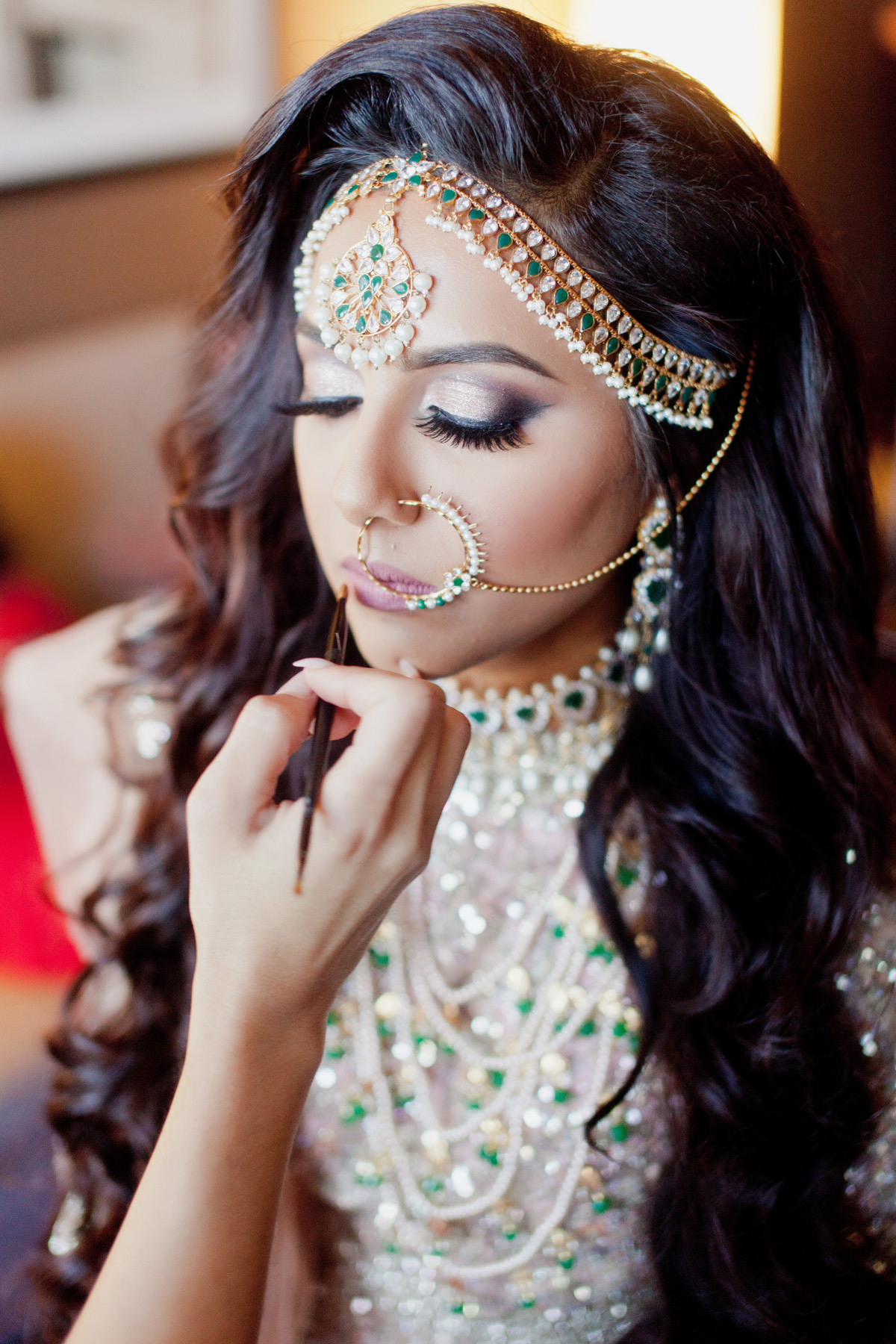
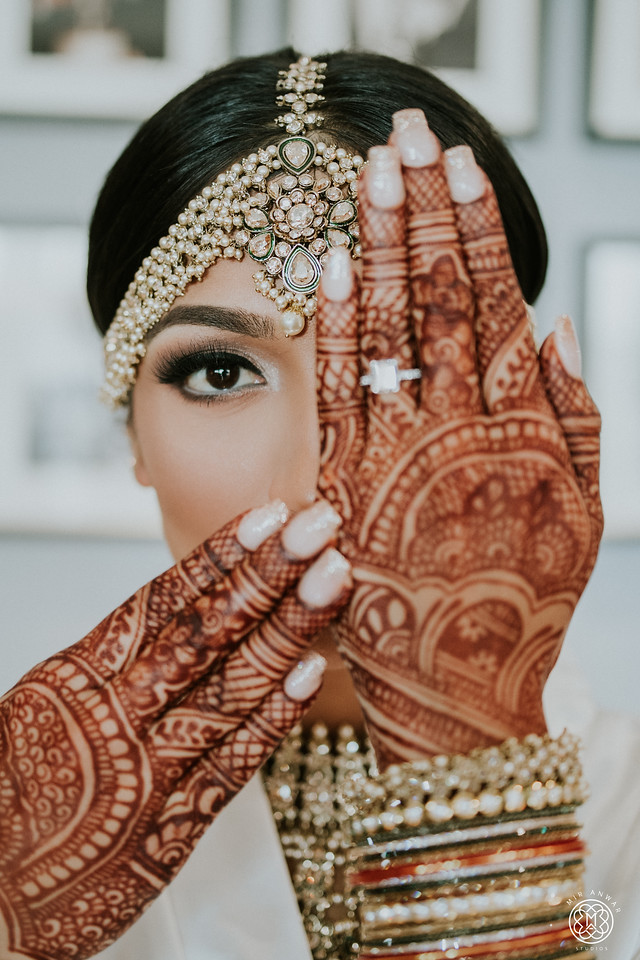
The mehndi is color in motion: dancing, henna drying on your hands, guests everywhere. Choose a silhouette with twirl, a flowing sharara in silk or a lehenga in lightweight georgette or organza that catches the breeze. This is the event for joyful color: emerald, fuchsia, tangerine, or a vivid multicolor print. Embroidery can be playful, mirror work, gota patti, or thread florals, rather than the heavy zardozi reserved for the ceremony. Jewelry steps up one notch: oxidized silver or colorful beaded sets, a statement maang tikka, layered bangles that you can actually dance in. Hair: a side braid with fresh flowers, or a high ponytail with waves for movement. Makeup: warm and radiant, a bold lip in coral or berry, lashes that hold through the evening. The mehndi look should feel like celebration, not formality.
Sangeet: Your Most Glamorous Entrance
The sangeet is your stage. This is the most glamorous evening look of the week, and the one most brides photograph like an editorial. Lean into modern silhouettes: a pre-draped sari gown, a sequined lehenga in a jewel tone, or a sharp sharara in metallic fabric. Fabrics with sheen, sequins, lame, or silk with metallic thread, catch stage light beautifully. Jewelry goes bold: a statement choker or layered polki, chandbalis or shoulder-dusting earrings, a matha patti if the neckline allows. Hair: a sleek low bun with a center part, or old-Hollywood waves with a deep side part, polished and camera-ready. Makeup: the most dramatic of the week short of the reception, defined eyes, contoured glow, a deep or classic red lip. Think performance, presence, and sparkle.
The Ceremony: The Heirloom Moment
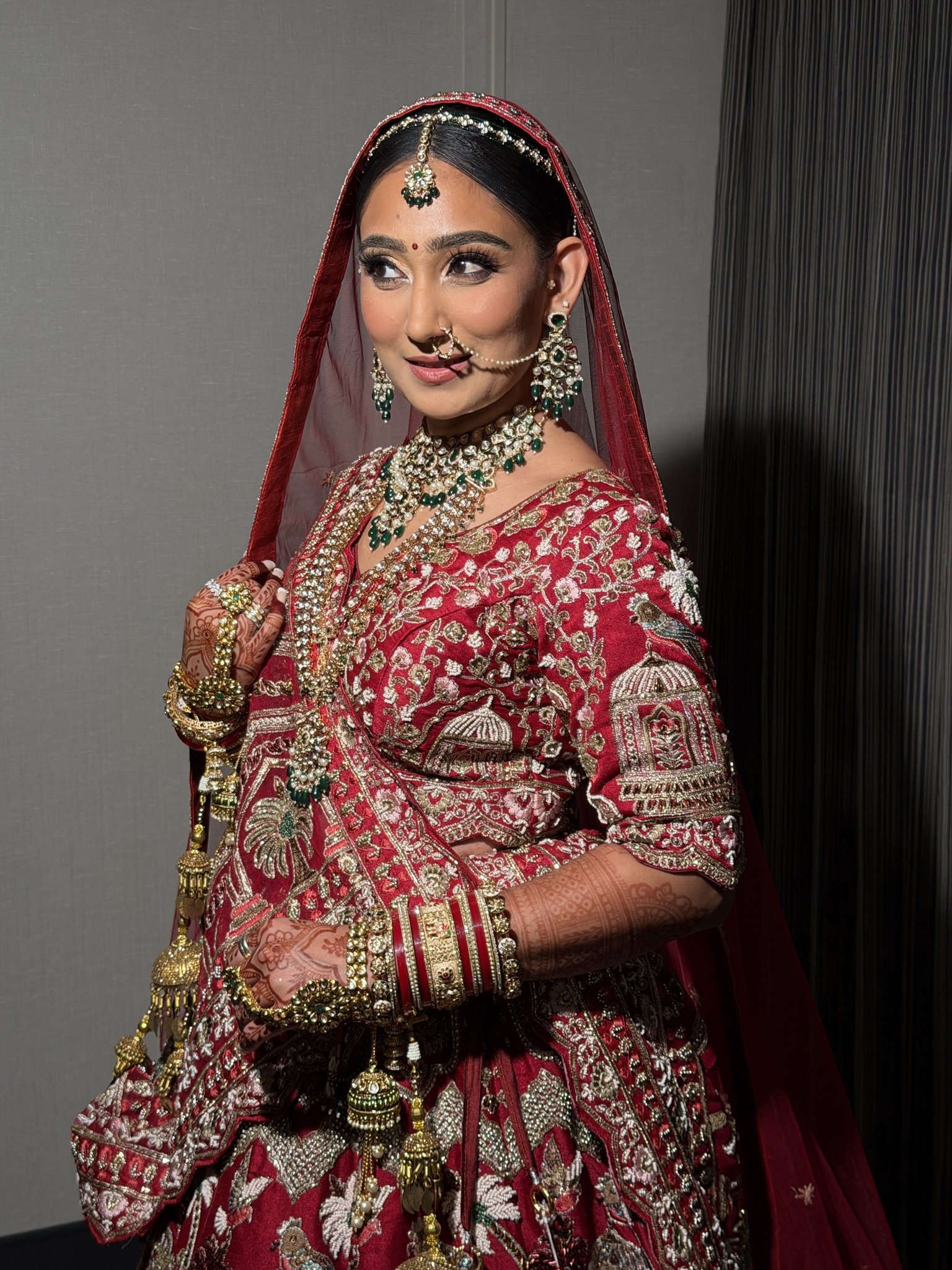
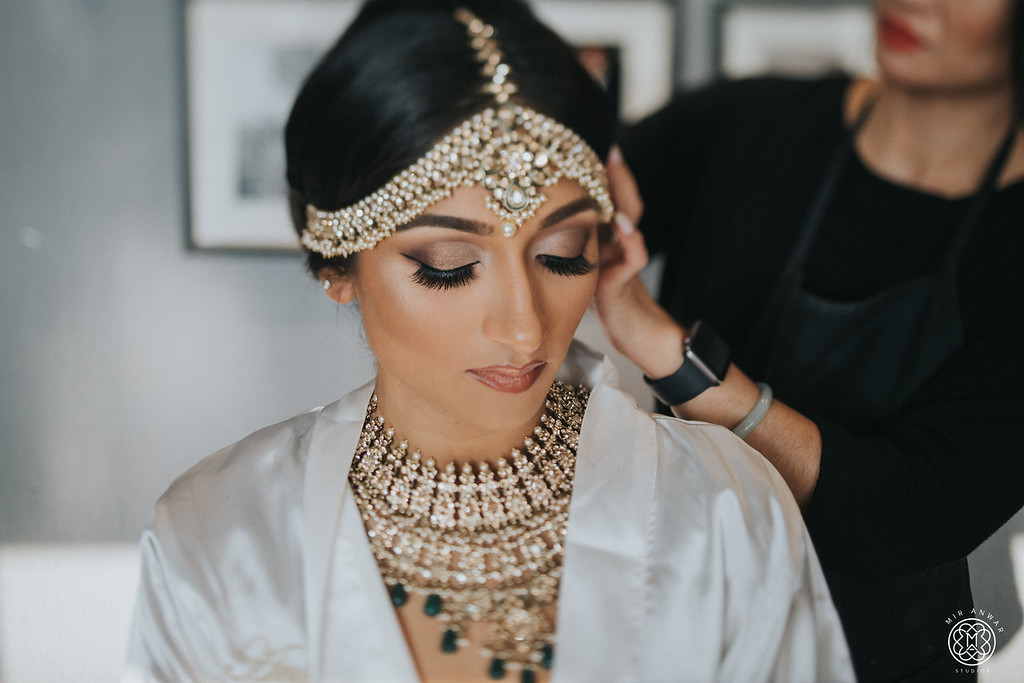
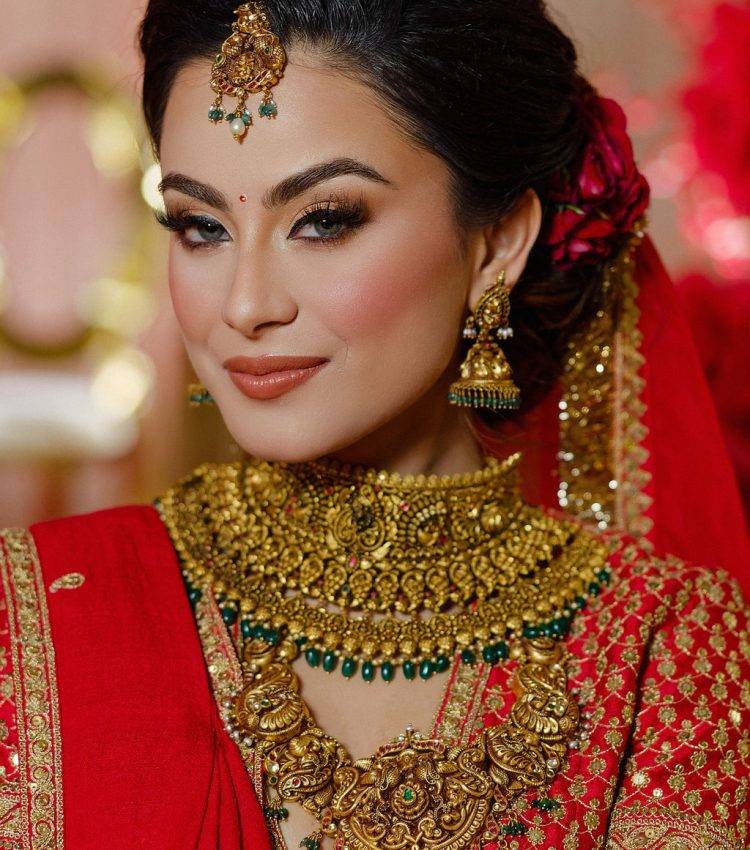
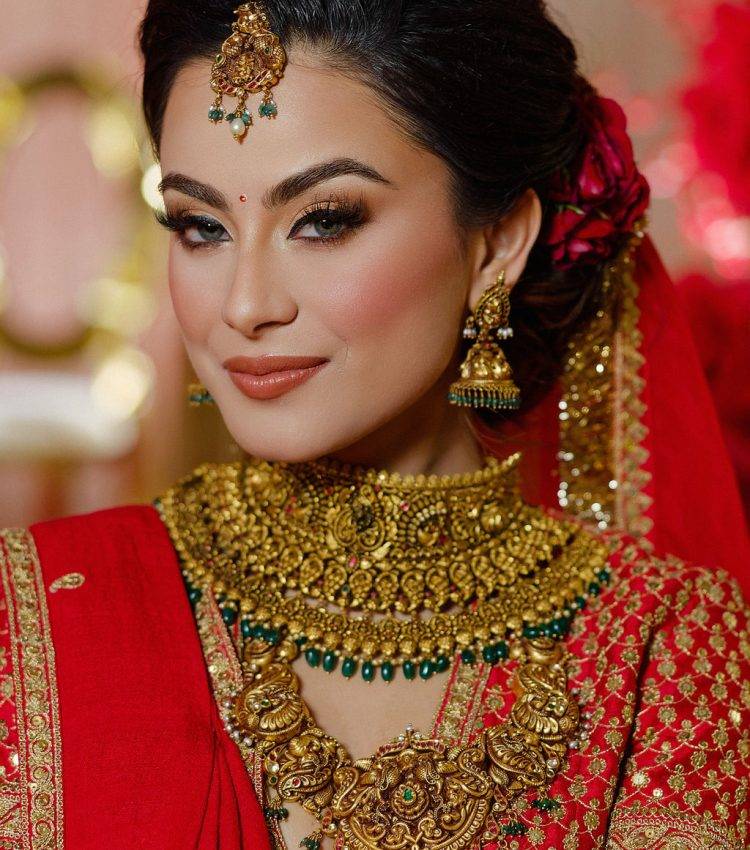
The ceremony is the heirloom. This is the look your grandchildren will see in albums, so choose with a longer horizon than trends. A classic red, maroon, or deep ivory lehenga in raw silk or velvet, with the heaviest handwork of the week: zardozi, dabka, or nakshi embroidery that reads as heritage. If your family tradition calls for a sari, a Kanjivaram or Banarasi in a bridal red carries the same weight. Jewelry reaches its peak: a polki or kundan choker paired with a rani haar, jhumkas or chandbalis, maang tikka or matha patti, nath, haath phool, and the full bangle stack including chooda or kadas as your tradition dictates. Hair: a structured bun or a traditional braided style that anchors the dupatta and tikka. Makeup: timeless and long-wearing, defined but not trendy, built to look flawless at hour ten. Nothing here should feel borrowed from a moment; everything should feel inherited.
The Reception: Modern, Polished, Unmistakably You
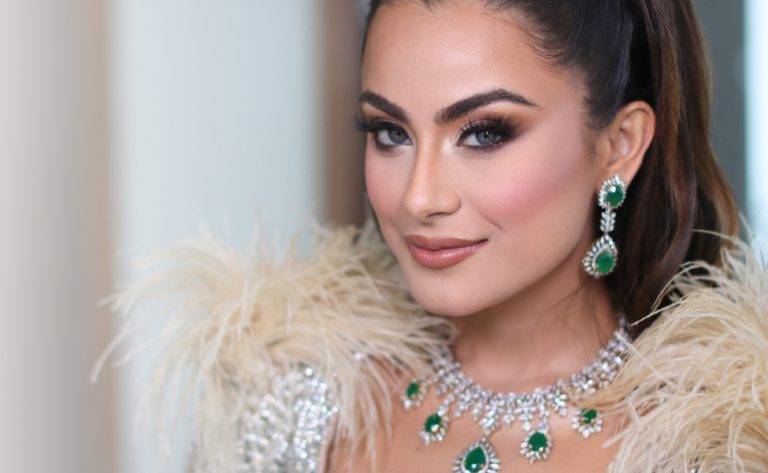
The reception is you, distilled. After the ceremony’s tradition, the reception look can be modern, editorial, and entirely personal. A champagne or blush lehenga with tonal embroidery, a structured sari gown in crepe or satin, or an Indo-western silhouette in a jewel tone with clean lines. Fabrics: crepe, satin, tulle over silk, anything that moves like water under evening light. Jewelry becomes curated rather than maximal: one hero piece, diamond or polki choker, emerald or ruby drops, or a single striking rani haar, with the rest pared back. Hair: sleek and modern, a low knot, glass waves, or a polished ponytail. Makeup: luminous skin, a sculpted eye, and a lip color chosen for photographs rather than tradition. End the week as the most current version of yourself.
The Cohesive Thread: Color Story and Motif
Five distinct looks still need one story. The simplest way to hold them together is a color story: choose a palette family and let it deepen across the week. Pastels and marigold at haldi, jewel brights at mehndi and sangeet, deep reds and maroons at the ceremony, then champagne, blush, or metallics at the reception. The eye reads the progression as intentional, even when no two outfits share a color. The second anchor is a motif: a paisley, a lotus, a jaal pattern, or a particular embroidery style that echoes across two or three outfits in different scales. Repeat it loudly on the ceremony lehenga and whisper it on the mehndi dupatta. Finally, keep one signature constant: the same maang tikka style, the same bangle stack carried across events, or a consistent hair part. Constants make the variations feel like chapters, not costume changes.
Scaling Intensity Without Repeating Yourself
The rule that ties it all together: each element gets one crescendo per week. If the ceremony carries the heaviest necklace, the sangeet carries the boldest earrings, and the reception carries the most modern hair, nothing competes and nothing repeats. Map the five events on paper before you buy anything: assign each event its lead element, outfit, jewelry, hair, or makeup, and let the others support. You will shop faster, spend with intention, and walk into every room looking like the plan was always yours.
FAQ
Should my outfits match each other across events?
They should relate, not match. Share a color story or motif across the week, but let each event have its own silhouette, fabric, and mood. Matching outfits read as one long event; a planned progression reads as a celebration.
Which event gets the heaviest jewelry?
The ceremony, almost always. It is the heirloom look, built for albums and ritual. Let the other events peak in different ways: boldest earrings at the sangeet, most playful color at the mehndi.
Can I wear red before the ceremony?
You can, but many stylists keep the deepest bridal reds reserved for the ceremony so that look stays singular. If you love red, wear brighter or softer versions earlier, coral at the mehndi or a red-toned print at the sangeet, and save the true bridal red for the ceremony.
How far in advance should I plan all five looks?
Start four to six months out. Outfits need lead time for fittings, jewelry may need custom work, and planning the arc first means every purchase has a purpose. Multi-event planning over a four-month timeline is exactly what a Bridal Creative Direction engagement is built around.
A final note
Planning five cohesive looks takes a strategist’s eye and hours you may not have. Bridal Creative Direction is a strategy-only consulting service: it begins with an application, followed by a fit call, and from there your complete multi-event look plan is designed for you, from color story to jewelry pairings, so you can shop and book with total confidence. Learn more here: https://jtorryart.com/south-asian-bridal-creative-direction/